AWS vs Traditional Hosting: Which is Better?

Businesses today must choose between traditional hosting and cloud hosting platforms like AWS.
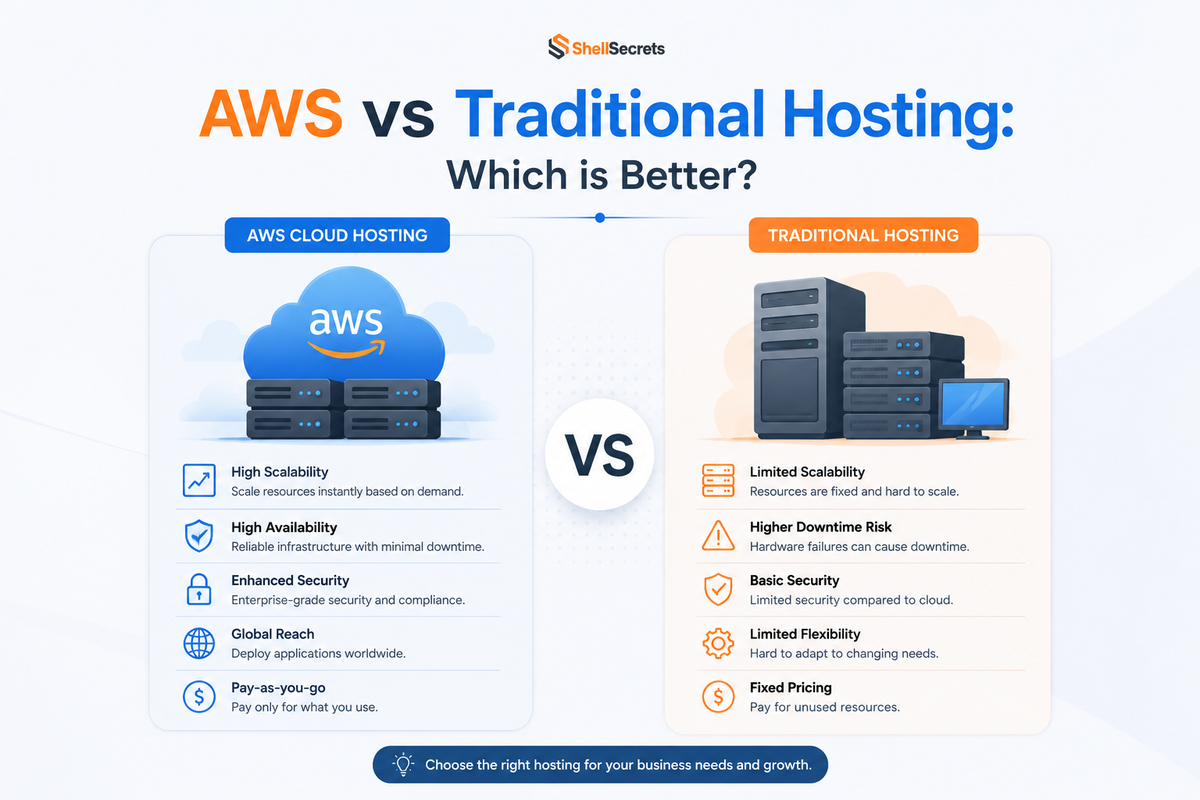
Traditional hosting uses fixed physical or virtual servers, while AWS provides scalable cloud infrastructure.
Understanding the differences helps businesses make better infrastructure decisions.
Traditional Hosting
Traditional hosting includes:
- Shared hosting
- VPS hosting
- Dedicated servers
Advantages
- Lower initial cost
- Simple setup
- Easier for small websites
Limitations
- Limited scalability
- Downtime risks
- Hardware dependency
AWS Cloud Hosting
AWS provides:
- Elastic infrastructure
- Pay-as-you-go pricing
- Global cloud services
Advantages of AWS
Scalability
Scale servers instantly based on traffic.
High Availability
AWS infrastructure minimizes downtime.
Security
Enterprise-grade cloud security.
Flexibility
Choose resources dynamically.
Global Reach
Deploy applications worldwide.
Which One Should You Choose?
Choose Traditional Hosting If:
- You have a small static website
- Budget is very limited
- You do not require scalability
Choose AWS If:
- You expect business growth
- You need cloud scalability
- You require better uptime
- You need enterprise security
Final Verdict
Traditional hosting works for basic websites, but AWS offers better scalability, flexibility, and cloud performance for modern businesses.
For growing businesses and cloud-native applications, AWS is usually the better long-term solution.