Why SSL/HTTPS Is Essential for Every Modern Website

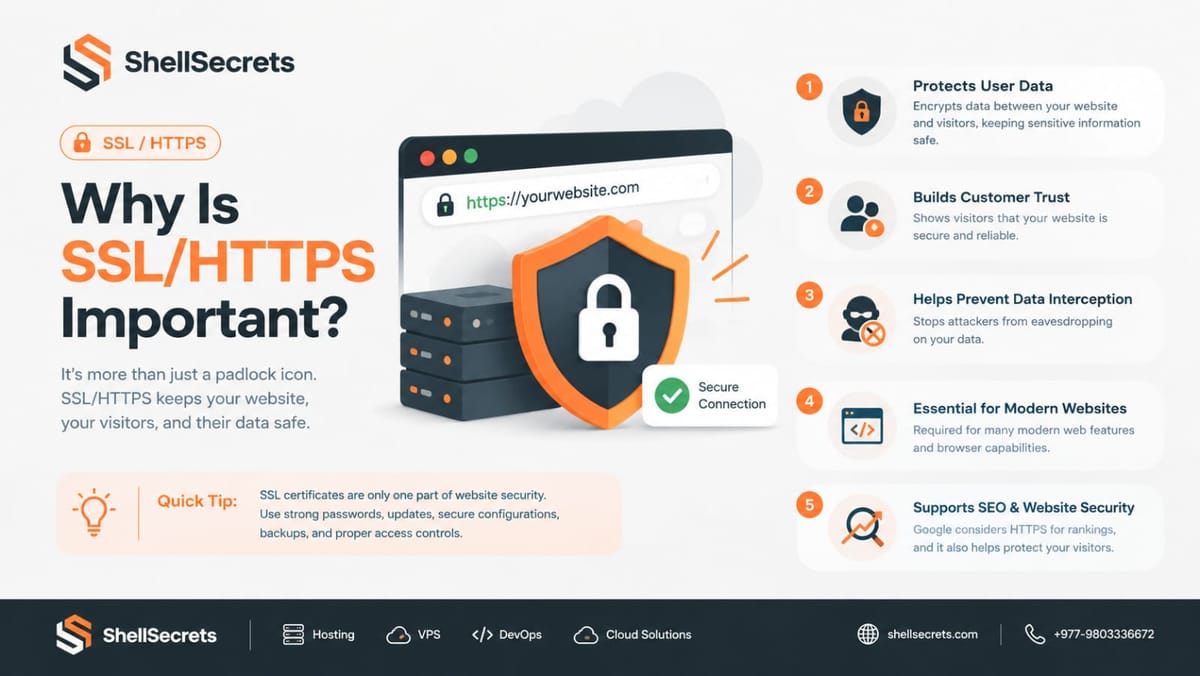
In today's digital world, website security is no longer optional—it's a necessity. Whether you run a personal blog, an eCommerce store, a business website, or a SaaS platform, protecting your visitors' data should be one of your highest priorities. One of the simplest and most effective ways to improve website security is by enabling SSL (Secure Sockets Layer) or TLS (Transport Layer Security), which allows your website to use HTTPS instead of HTTP.
If you've ever noticed the small padlock icon beside a website's URL, it indicates that the website is using HTTPS and that communication between the visitor and the server is encrypted.
Why Website Security Matters
Every day, websites exchange sensitive information such as login credentials, contact forms, customer details, payment information, and personal data. If this information is transmitted over an unsecured HTTP connection, attackers may attempt to intercept or manipulate the data during transmission. This can result in compromised user privacy, loss of customer trust, and potential financial or reputational damage for businesses.
As cyber threats continue to evolve, securing your website has become an essential part of maintaining a reliable online presence.
Common Risks of Not Using HTTPS
Operating a website without HTTPS can expose both website owners and visitors to several risks, including:
- Data transmitted between users and the website is not encrypted.
- Login credentials and sensitive information may be vulnerable to interception.
- Modern browsers often display "Not Secure" warnings, reducing visitor confidence.
- Some modern browser features and APIs require secure HTTPS connections.
- Poor security practices can negatively impact user trust and overall website credibility.
Benefits of SSL/HTTPS
1. Protects User Data
SSL encrypts all data exchanged between the user's browser and your server, making it significantly more difficult for unauthorized parties to read sensitive information such as passwords, payment details, and personal information.
2. Builds Customer Trust
Visitors are more likely to interact with websites displaying the secure padlock icon. HTTPS reassures users that your website values their privacy and security, increasing confidence in your brand.
Read More: 10 Reasons to Use a Professional Business Email
3. Helps Prevent Data Interception
Encrypted communication helps reduce the risk of attackers intercepting or altering information while it travels across the internet. This is particularly important when users submit forms or access secure accounts.
4. Essential for Modern Websites
Many modern web technologies—including Progressive Web Apps (PWAs), geolocation, service workers, payment APIs, and browser notifications—either require or work best over HTTPS. A secure connection ensures compatibility with current web standards.
5. Supports SEO and Website Performance
Google considers HTTPS as one of the ranking signals when evaluating websites. While it is only one factor among many, using HTTPS contributes to better SEO practices and demonstrates a commitment to website security. Visitors are also more likely to remain on a trusted website, improving engagement and reducing bounce rates.
How to Secure Your Website
Implementing HTTPS is straightforward:
- Obtain an SSL/TLS certificate from a trusted Certificate Authority or use a free certificate provider such as Let's Encrypt.
- Install the certificate on your web server.
- Redirect all HTTP traffic to HTTPS.
- Update internal links, images, scripts, and other resources to use HTTPS.
- Regularly renew and monitor your SSL certificate to avoid expiration.
Read More: Guide to Launching Your First Website
Final Thoughts
SSL/HTTPS is one of the most fundamental security measures every website should implement. It encrypts user data, strengthens customer trust, supports modern web technologies, and contributes to better search engine visibility. Whether you're launching a new website or managing an existing one, enabling HTTPS is a simple investment that delivers long-term security, credibility, and peace of mind for both you and your visitors.