
System Administration
Linux File Permissions, Users & Groups: A Complete Practical Guide
Learn Linux file and directory permissions, users, groups, chmod, chown, umask, ACLs, and security best practices with practical examples.

Hi, I'm a Linux Sysadmin and DevOps Engineer, fascinated by servers and nature.

System Administration
Learn Linux file and directory permissions, users, groups, chmod, chown, umask, ACLs, and security best practices with practical examples.

Security
Introduction A critical vulnerability in the Linux kernel's TCP networking subsystem has raised security concerns for organizations running Linux-based servers, cloud infrastructure, and containerized workloads. Tracked as CVE-2026-98432, the vulnerability has received a CVSS 3.1 score of 9.8 out of 10 from the

Security
Introduction A server can have a fully patched operating system, properly configured firewall rules, endpoint monitoring, and Secure Boot enabled—and still be vulnerable before any of those protections have an opportunity to work. That is the concern raised by CVE-2026-97631, a critical vulnerability discovered in the UEFI
Security
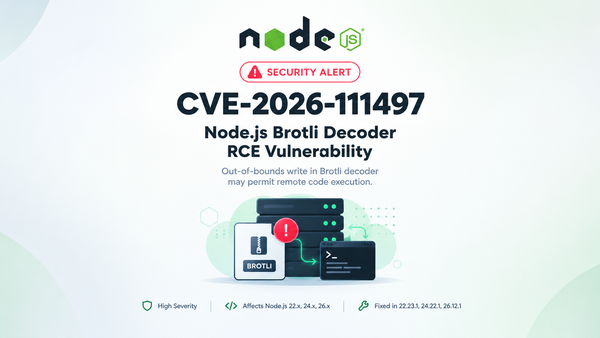
Introduction Modern web applications process enormous volumes of compressed data every second. Whether serving APIs, delivering static assets, streaming content, or responding to browser requests, compression plays a vital role in improving performance while reducing bandwidth consumption. One of the most efficient compression algorithms available today is Brotli, developed by
PHP
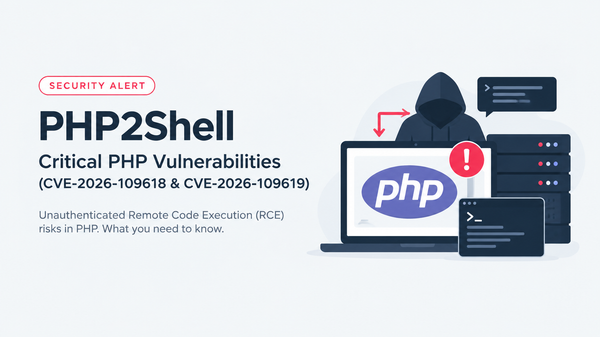
Introduction When security vulnerabilities affect a widely deployed technology, the consequences often extend far beyond individual organizations. That is precisely the case with PHP2Shell, the name given to two critical Remote Code Execution (RCE) vulnerabilities tracked as CVE-2026-109618 and CVE-2026-109619. Unlike application-specific vulnerabilities that impact

Linux
The cybersecurity landscape evolves every day, but only a handful of vulnerabilities fundamentally change how organizations think about infrastructure security. CVE-2026-99999 is one of those vulnerabilities. Disclosed in October 2026 and widely referred to by the security community as PwnEscape, this Linux kernel vulnerability highlights an important truth:

VPS
A freshly deployed VPS is exposed to the internet within minutes. Automated bots constantly scan for Weak SSH credentials, Open ports, Vulnerable services, Misconfigured Docker containers, Outdated software, Default configurations and other weak spots. The default installation of most Linux distributions is usable, but not production-ready from a security

Optimizing static websites for best performance is essential to ensure fast loading times, improved user experience, and better search engine rankings. Since static websites consist of fixed HTML, CSS, and JavaScript files that don't change unless manually updated, there are several strategies you can employ to optimize them.