Full root access
Log in as root (or Administrator) and configure the server exactly the way your project needs.
Shared hosting: No root or sudo access
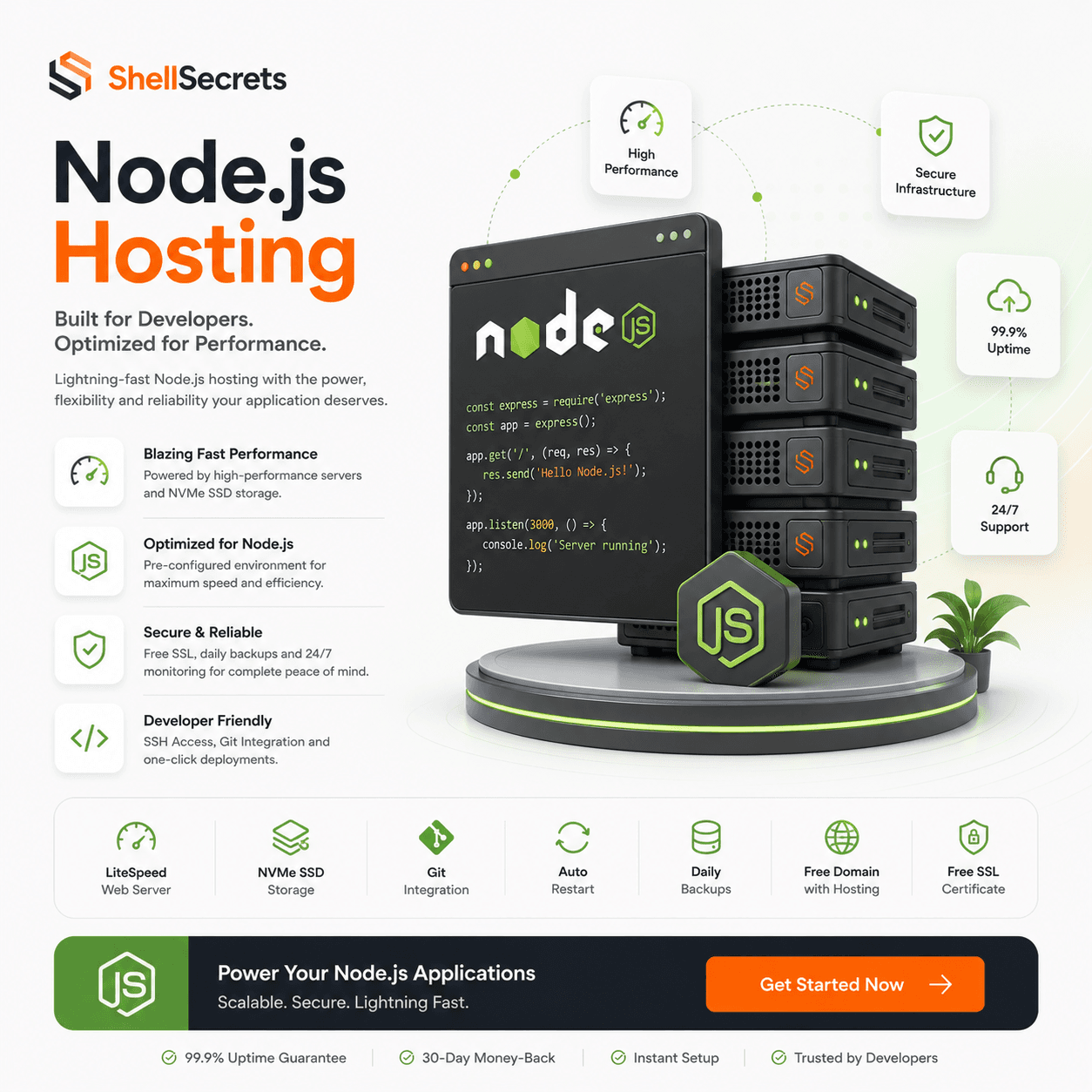
Deploy JavaScript backends, APIs, real-time apps, dashboards, and workers on secure VPS servers with Git deployment, SSL, backups, and expert support.
Multiple Node.js versions
Git-based deployment
Free SSL certificates
Full root and SSH access
Automatic backups
24/7 developer support
From $5.74/mo
No hidden fees
Always-on infrastructure built for scale.
Talk to Our Experts
Get tailored guidance for your goals.
Deploy JavaScript backends, APIs, dashboards, and real-time apps on VPS servers with Git, SSH, SSL, backups, and support.
vCPU
2
RAM
4 GB
Storage
60 GB SSD
IPv4
Bandwidth
100 MbpsThe default bandwidth is 100 Mbps. You can upgrade it for an additional fee. Fair usage applies; real-world speed varies with network load, shared usage and distance.
$8.53/mo
$102.36 per year
vCPU
3
RAM
6 GB
Storage
100 GB SSD
IPv4
Bandwidth
100 MbpsThe default bandwidth is 100 Mbps. You can upgrade it for an additional fee. Fair usage applies; real-world speed varies with network load, shared usage and distance.
$22.48/mo
$269.76 per year
vCPU
4
RAM
8 GB
Storage
140 GB SSD
IPv4
Bandwidth
200 MbpsThe default bandwidth is 200 Mbps. You can upgrade it for an additional fee. Fair usage applies; real-world speed varies with network load, shared usage and distance.
$17.2/mo
$206.4 per year
vCPU
6
RAM
12 GB
Storage
180 GB SSD
IPv4
Bandwidth
200 MbpsThe default bandwidth is 200 Mbps. You can upgrade it for an additional fee. Fair usage applies; real-world speed varies with network load, shared usage and distance.
$37.48/mo
$449.76 per year
vCPU
8
RAM
18 GB
Storage
240 GB SSD
IPv4
Bandwidth
300 MbpsThe default bandwidth is 300 Mbps. You can upgrade it for an additional fee. Fair usage applies; real-world speed varies with network load, shared usage and distance.
$30/mo
$360 per year
vCPU
8
RAM
24 GB
Storage
280 GB SSD
IPv4
Bandwidth
300 MbpsThe default bandwidth is 300 Mbps. You can upgrade it for an additional fee. Fair usage applies; real-world speed varies with network load, shared usage and distance.
$79.98/mo
$959.76 per year
vCPU
10
RAM
28 GB
Storage
320 GB SSD
IPv4
Bandwidth
500 MbpsThe default bandwidth is 500 Mbps. You can upgrade it for an additional fee. Fair usage applies; real-world speed varies with network load, shared usage and distance.
$94.98/mo
$1,139.76 per year
vCPU
16
RAM
32 GB
Storage
400 GB SSD
IPv4
Bandwidth
500 MbpsThe default bandwidth is 500 Mbps. You can upgrade it for an additional fee. Fair usage applies; real-world speed varies with network load, shared usage and distance.
$119.98/mo
$1,439.76 per year
Long-running processes, WebSockets, and workers need a real server. A VPS lets you pick your Node.js version, manage it with PM2 or systemd, and skip shared-hosting caps.
Log in as root (or Administrator) and configure the server exactly the way your project needs.
Shared hosting: No root or sudo access
Run as many processes and concurrent connections as your server's resources allow — no per-account NPROC or entry-process caps.
Shared hosting: Per-account process caps
No LVE-style per-account CPU or I/O limits. Your workload uses the vCPU and disk throughput your plan provides.
Shared hosting: CPU and I/O limited per account
Resources allocated to your server rather than pooled with every other account on a shared host.
Shared hosting: Resources shared between accounts
Any runtime, language version, database, container engine, custom software, or system package you need.
Shared hosting: Limited to the host's software
Set your own firewall rules, open the ports you need, and apply your own SSH and hardening policies.
Shared hosting: Host-wide rules you can't change
Keep queue workers, WebSockets, and long-running services up, and schedule cron jobs without restriction.
Shared hosting: Long-running processes restricted
Pick the Linux distribution you prefer and reinstall a clean image whenever you want a fresh start.
Shared hosting: OS fixed by the host
Move code, dependencies, env vars, databases, SSL, and DNS with a cleaner deployment path.
Node.js migrations need runtime checks, dependency validation, environment handling, and post-deploy log review. We help move the app without turning the launch into guesswork.
Connect with our DevOps experts for fast, reliable support.
Node.js hosting works best when code, runtime, dependencies, logs, and rollback paths are handled as one workflow.
Deploy code from Git repositories or upload application files through SSH workflows.
Install dependencies, select runtime versions, configure environment variables, and prepare the app.
Keep APIs, dashboards, real-time apps, and workers running with process-aware hosting support.
Use backups, logs, and support checks to recover faster when deploys or dependencies misbehave.
A Node.js app can fail because of a missing environment variable, wrong runtime, bad build command, SSL issue, or database connection. We make those checks visible before launch.
Use familiar Node.js tools while hosting keeps SSL, DNS, backups, email, databases, and support in one place.
Deploy frontend frameworks, backend APIs, workers, and JavaScript services while keeping hosting operations visible and supportable.
Run REST and GraphQL APIs with SSL, DNS, database connections, logs, and deployment support in one hosting account.
Use Git workflows, root SSH access, runtime selection, and support for dependency setup.
Get help reviewing logs, runtime errors, deploy commands, environment variables, SSL, DNS, and migration issues.
Get practical help with migrations, Node.js versions, build errors, environment variables, SSL, DNS, database connections, Git deployment, and runtime logs.
Get round-the-clock guidance from experienced support engineers.
Open a ticket for technical issues, migrations, billing, or service help.
Talk with our team when you need quick help with urgent questions.
Browse knowledge base articles, setup guides, and troubleshooting notes.
Answers about managed Node.js hosting, frameworks, deployment, databases, SSH, migration, and DevOps support.
Node.js hosting lets you run server-side JavaScript applications such as APIs, dashboards, real-time apps, workers, and microservices using the Node.js runtime.
Explore practical hosting, server, cloud, and DevOps guides from the ShellSecrets articles hub.

In today's digital world, website security is no longer optional—it's a necessity. Whether you run a personal blog, an eCommerce store, a business website, or a SaaS platform, protecting your visitors' data should be one of your highest priorities. One of the simplest and most effective ways to improve website security is by enabling SSL (Secure Sockets Layer) or TLS (Transport Layer Security), which allows your website to use HTTPS instead of HTTP. If you've ever noticed the small padlock icon
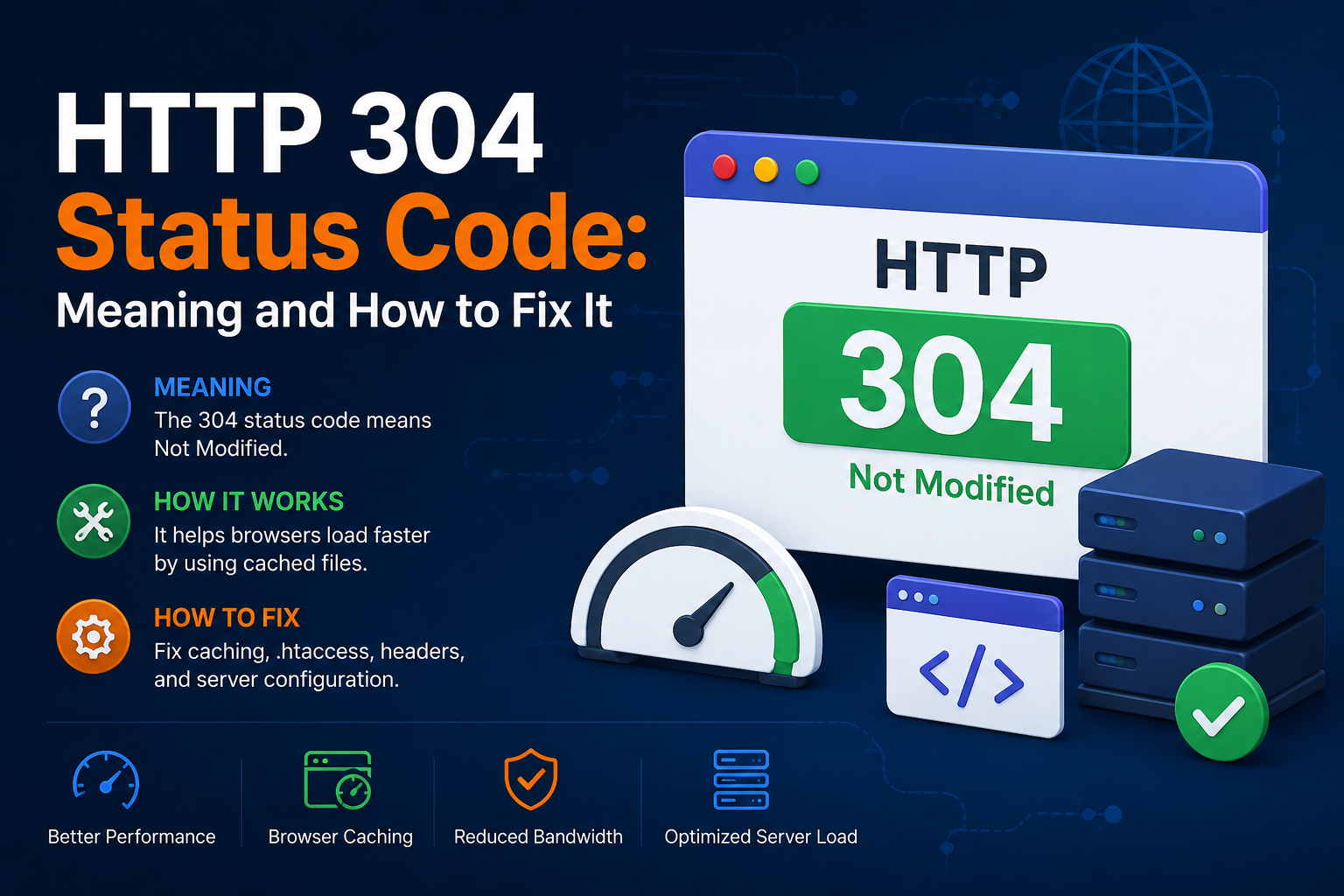
When browsing websites, loading pages quickly is important for both users and search engines. One HTTP response that helps improve website performance is the HTTP 304 Status Code. If you’ve seen a “304 Not Modified” message in browser developer tools, server logs, or SEO audit reports, you may wonder what it means and whether it’s an issue. In this guide, we’ll explain the HTTP 304 status code, why it happens, its SEO impact, and how to fix related problems. What Is HTTP 304 Status Code? Th
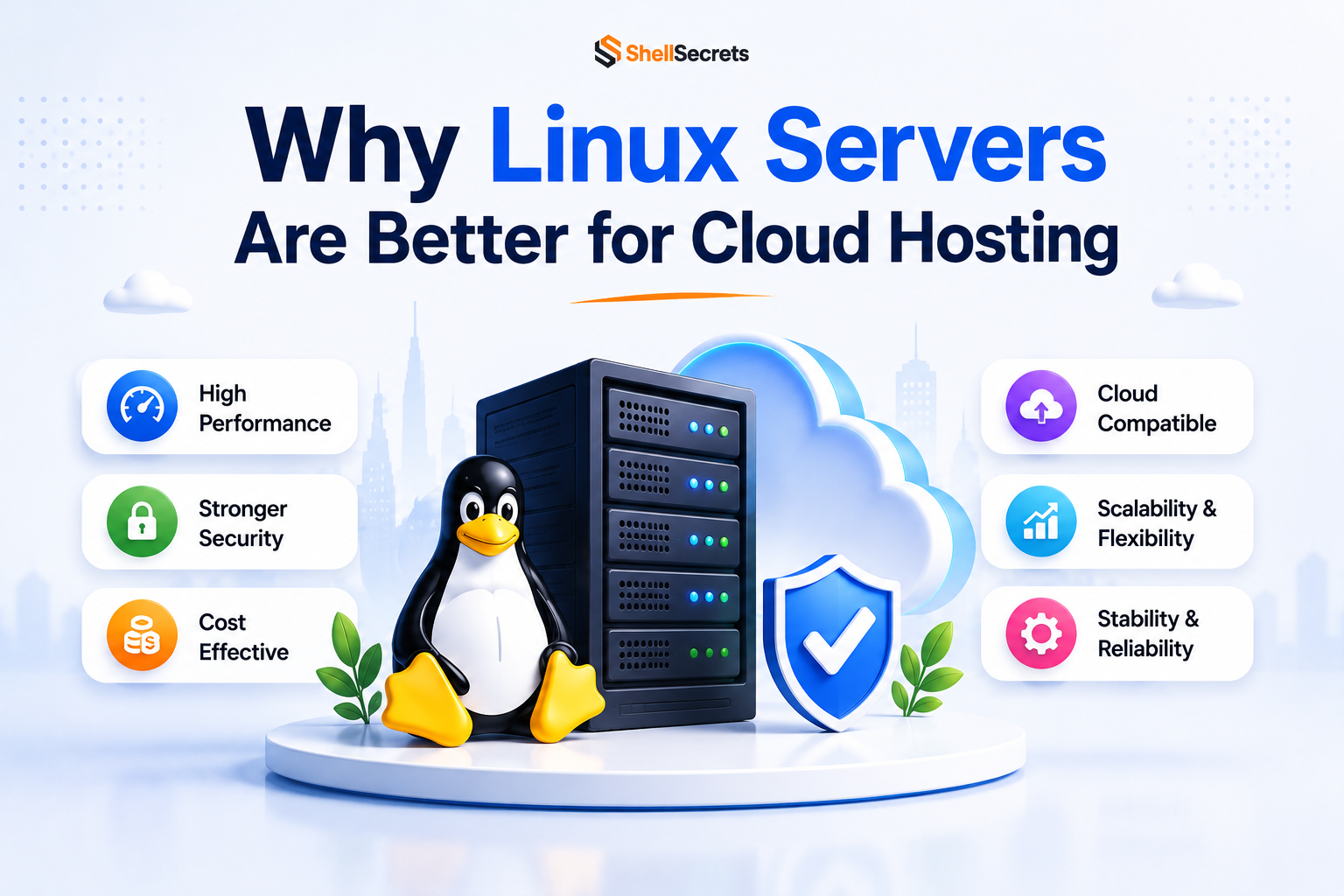
Linux servers dominate the cloud hosting industry because they are secure, stable, lightweight, and cost-effective. Most cloud platforms including AWS, Google Cloud, and Azure heavily rely on Linux-based infrastructure. Advantages of Linux Servers Better Performance Linux consumes fewer system resources compared to Windows Server. Strong Security Linux has strong permission management and lower malware exposure. Cost Effective Most Linux distributions are free to use. Stability Li