Pipeline Engineering
Design predictable build, test, release, and rollback workflows for web apps, APIs, workers, and scheduled workloads.
Git-based automation
Environment promotion
Rollback strategy
We build the operational layer behind modern software: pipelines, cloud environments, deployment safety, observability, security controls, and managed release workflows.
CI/CD pipeline design
Cloud infrastructure automation
Containers and orchestration
Monitoring and incident readiness
Security-first release workflows
Managed DevOps operations
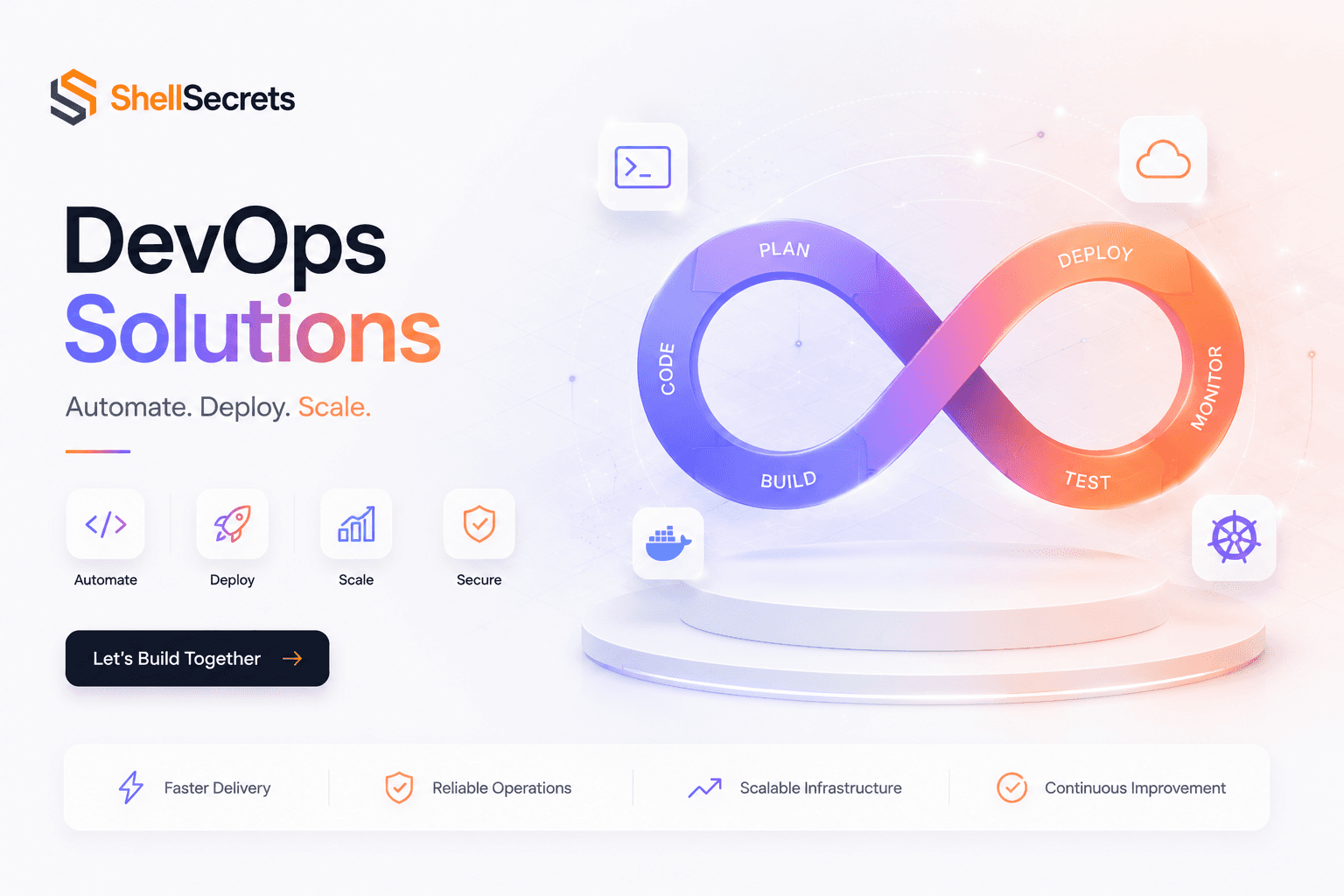
We turn fragile manual releases into a visible path with discovery, automation, validation, and operating controls.
Phase 1
Map applications, environments, credentials, DNS, data, risks, and release pain points.
Phase 2
Define the pipeline, infrastructure boundaries, rollback flow, monitoring signals, and security gates.
Phase 3
Build repeatable deployment paths for builds, images, tests, approvals, and environment promotion.
Phase 4
Run releases with alerts, runbooks, backups, validation checks, and practical incident handling.
We connect deployment, infrastructure, security, and monitoring into a practical operating system for your application.
Design predictable build, test, release, and rollback workflows for web apps, APIs, workers, and scheduled workloads.
Git-based automation
Environment promotion
Rollback strategy
Set up secure cloud networks, compute, storage, database access, DNS, certificates, and deployment environments.
VPC and firewall design
Compute and storage layout
DNS and SSL automation
Package applications cleanly with Docker-friendly workflows, registry strategy, resource limits, and runtime checks.
Dockerfiles and compose
Image registry flow
Runtime health checks
Build the monitoring layer teams need before production incidents happen: logs, metrics, alerts, and useful dashboards.
Service dashboards
Alert routing
Log and metric baselines
Harden servers, cloud accounts, deployment credentials, exposed services, and application delivery workflows.
Least-privilege access
Secrets handling
Patch and exposure review
Operate releases with a practical cadence: preflight checks, deployment windows, validation, and post-release monitoring.
Release runbooks
Cutover support
Post-deploy validation
Instead of selling isolated tools, we assemble the parts your application needs to build, ship, recover, and stay visible.
We design releases around visible checkpoints, not blind pushes. The goal is simple: know what changed, know what is healthy, and know how to recover.
Preflight checks before production changes
Staging validation where the application supports it
Rollback and restore steps documented before launch
Post-deploy monitoring window after every critical release
We design and implement the DevOps layer with your developers, then document the workflow so it remains maintainable.
We inspect current servers, pipelines, deployments, access, backups, and monitoring to remove hidden operational risk.
We stay involved for releases, monitoring, server maintenance, cloud changes, performance work, and incident response.
Talk to ShellSecrets for pipeline setup, server hardening, cloud management, monitoring, migration, release support, and incident-ready operations.
Get round-the-clock guidance from experienced support engineers.
Open a ticket for technical issues, migrations, billing, or service help.
Talk with our team when you need quick help with urgent questions.
Browse knowledge base articles, setup guides, and troubleshooting notes.
Answers about CI/CD, cloud management, server operations, containers, monitoring, and ongoing DevOps support.
We help with CI/CD pipelines, deployment automation, cloud setup, server hardening, containers, monitoring, backups, release operations, and ongoing infrastructure management.
Explore practical hosting, server, cloud, and DevOps guides from the ShellSecrets articles hub.
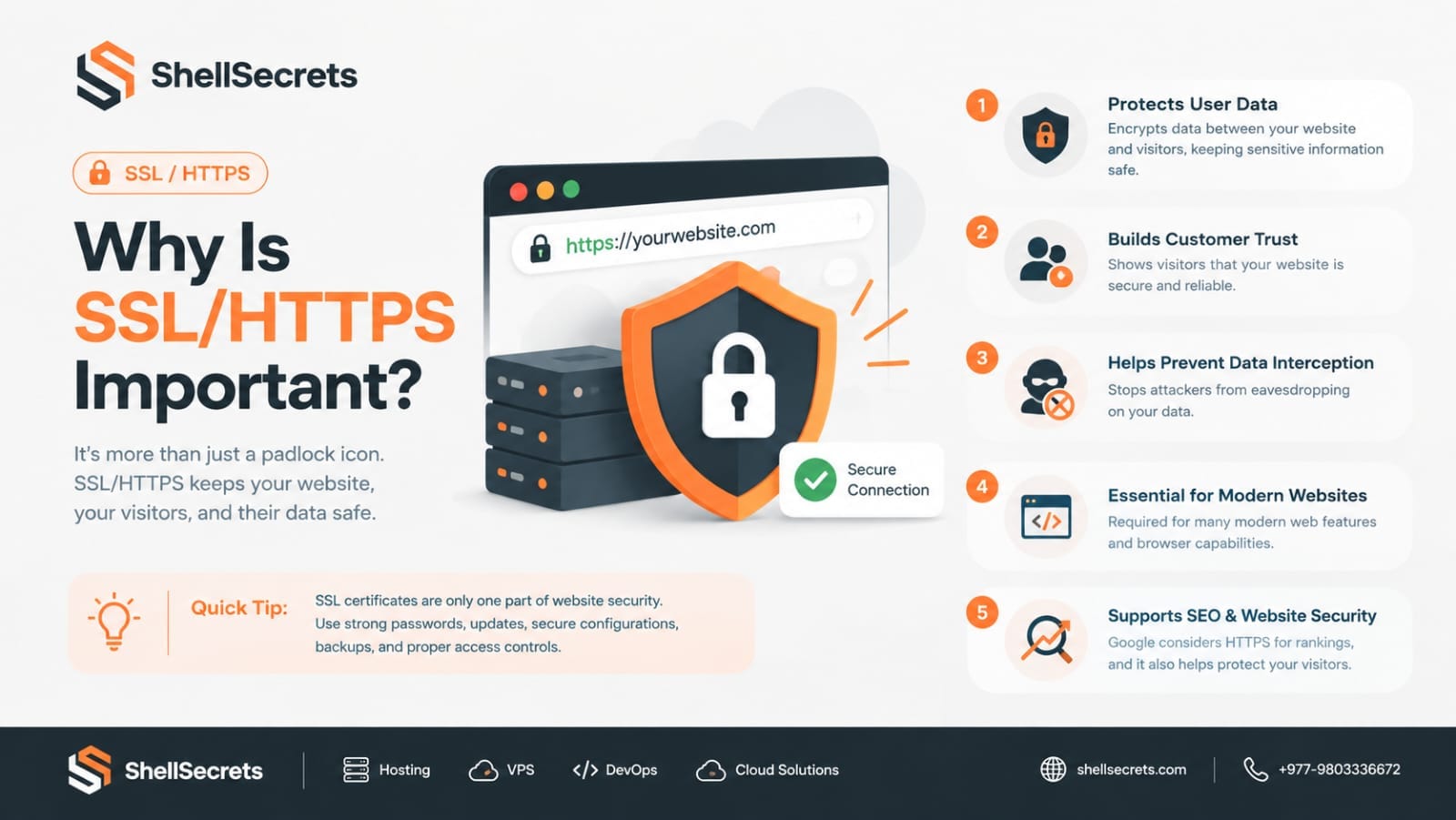
In today's digital world, website security is no longer optional—it's a necessity. Whether you run a personal blog, an eCommerce store, a business website, or a SaaS platform, protecting your visitors' data should be one of your highest priorities. One of the simplest and most effective ways to improve website security is by enabling SSL (Secure Sockets Layer) or TLS (Transport Layer Security), which allows your website to use HTTPS instead of HTTP. If you've ever noticed the small padlock icon
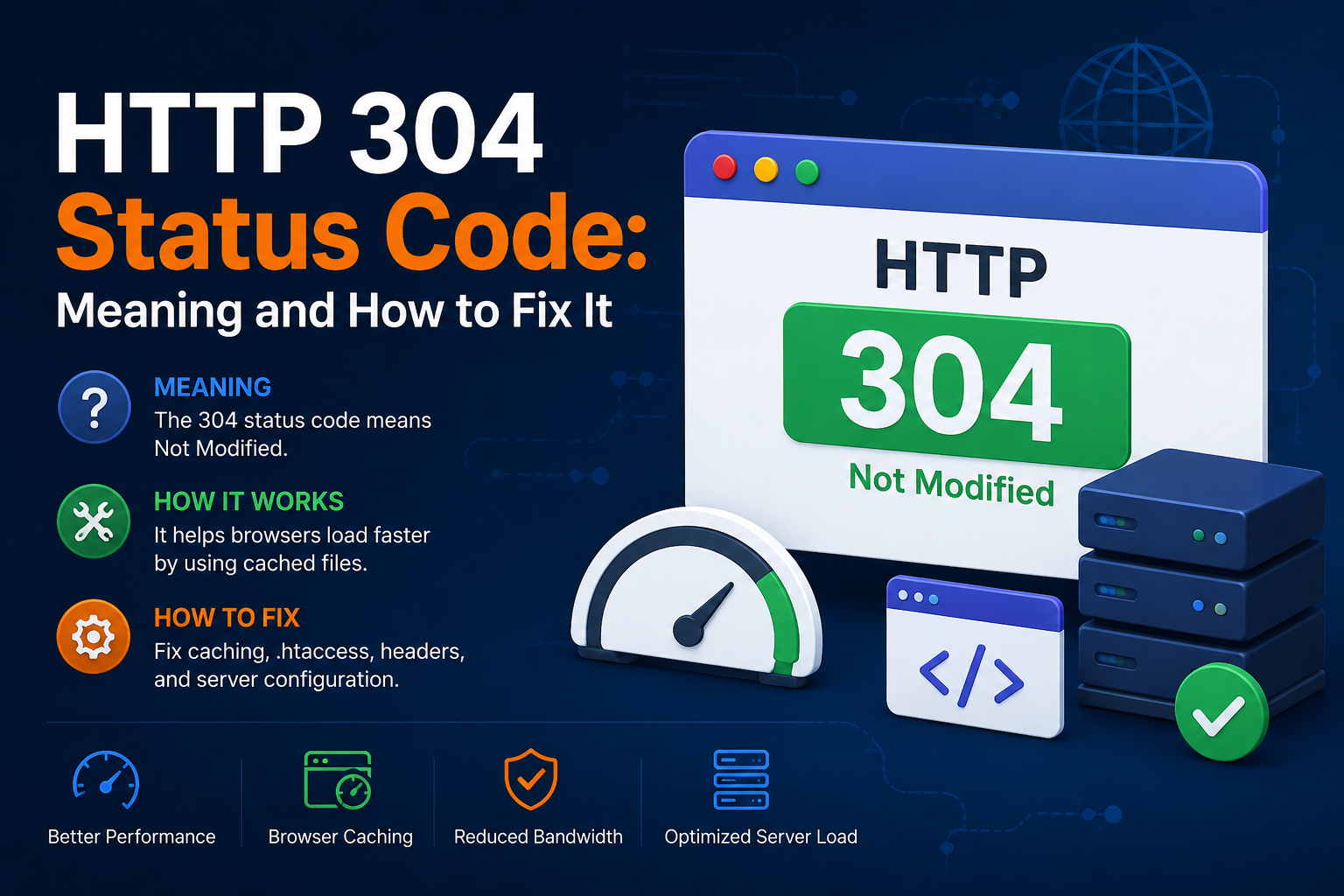
When browsing websites, loading pages quickly is important for both users and search engines. One HTTP response that helps improve website performance is the HTTP 304 Status Code. If you’ve seen a “304 Not Modified” message in browser developer tools, server logs, or SEO audit reports, you may wonder what it means and whether it’s an issue. In this guide, we’ll explain the HTTP 304 status code, why it happens, its SEO impact, and how to fix related problems. What Is HTTP 304 Status Code? Th
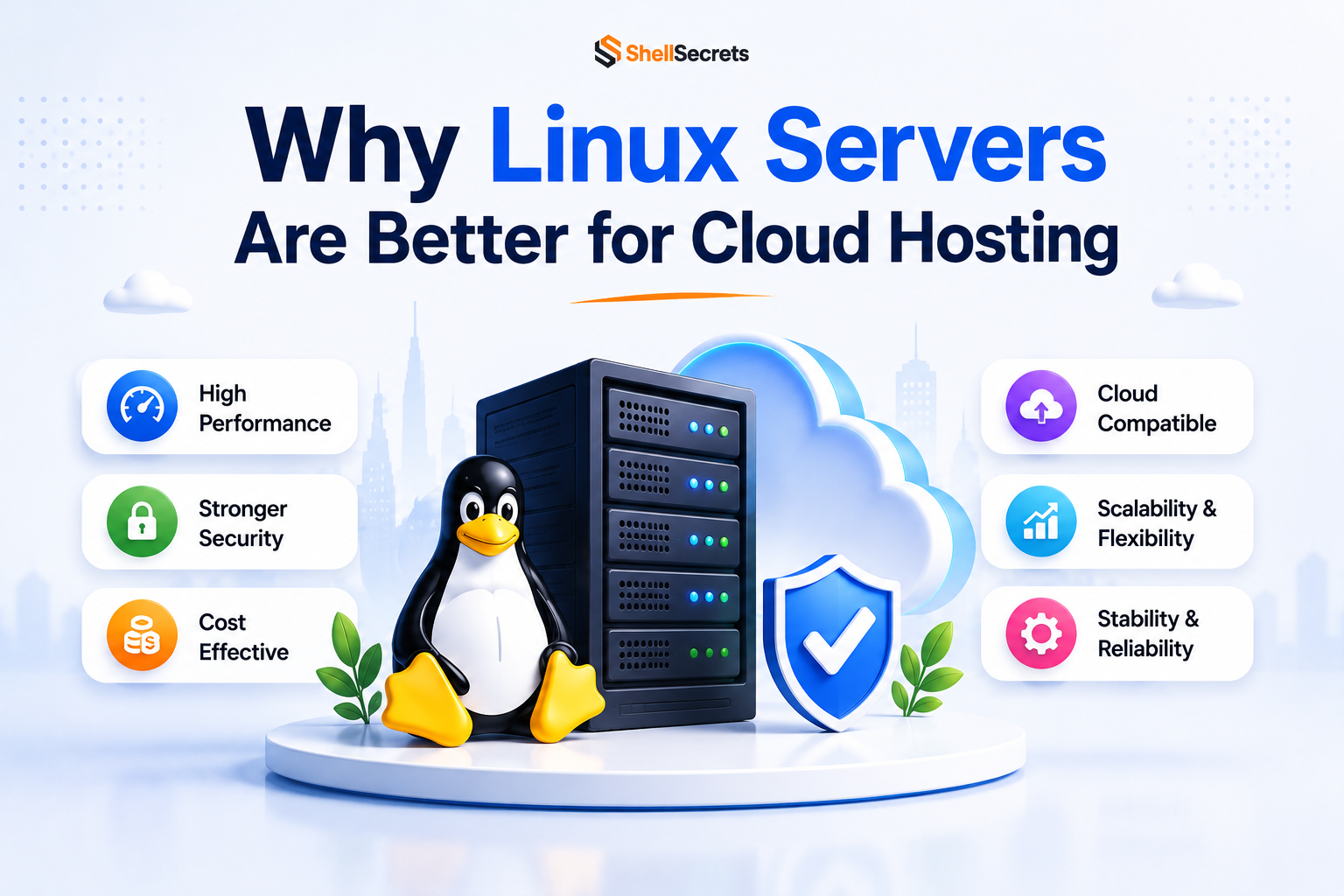
Linux servers dominate the cloud hosting industry because they are secure, stable, lightweight, and cost-effective. Most cloud platforms including AWS, Google Cloud, and Azure heavily rely on Linux-based infrastructure. Advantages of Linux Servers Better Performance Linux consumes fewer system resources compared to Windows Server. Strong Security Linux has strong permission management and lower malware exposure. Cost Effective Most Linux distributions are free to use. Stability Li